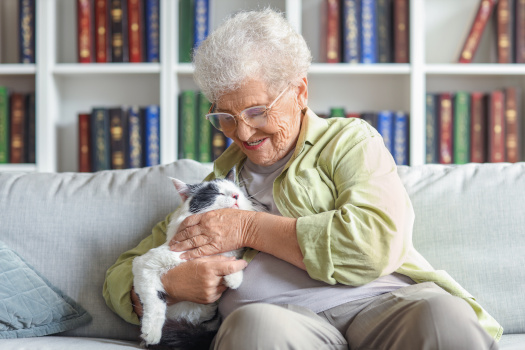
Caring for a senior loved one with dementia can be challenging, especially when managing anxiety and agitation. Pet therapy offers a gentle, noninvasive way to bring comfort and emotional support to those living with dementia.
The Emotional Benefits of Animal Companionship
Animals have a unique ability to connect with people on an emotional level. For individuals with dementia, interacting with pets can:
- Reduce feelings of loneliness and isolation
- Provide a sense of purpose and routine
- Trigger positive memories from the past
- Offer unconditional love and acceptance
Studies show spending time with animals can lower cortisol levels (a stress hormone) while increasing oxytocin, the hormone associated with bonding and relaxation. This biochemical response explains why pet therapy can be so effective in calming anxious individuals.
Engaging in pet therapy is known to boost quality of life, but seniors with dementia often require additional assistance to remain healthy and happy. Many older adults are choosing to age in place, and some need a helping hand to continue living at home safely and comfortably. Luckily, there are professional Home Care Philadelphia seniors and their families can trust and rely on.
How Pet Therapy Reduces Anxiety
Anxiety is common among people with dementia, often stemming from confusion, memory loss, or unfamiliar environments. Pet therapy addresses these concerns by:
- Creating a calming presence – The simple act of petting an animal can be soothing and grounding, redirecting anxious thoughts.
- Encouraging nonverbal communication – When words become difficult, touch and eye contact with an animal provide alternative ways to connect.
- Offering predictable interactions – Animals respond consistently, which can be reassuring for someone experiencing cognitive decline.
- Reducing agitation – Regular visits from therapy animals have been shown to decrease restlessness and aggressive behaviors.
Professional caregivers with experience in caring for seniors with dementia understand how to recognize and calm anxiety in their clients. Certain age-related conditions can make it more challenging for seniors to age in place safely and comfortably, but live-in care experts are available around the clock to help Philadelphia seniors manage their health. Whether your loved one is living with dementia or recovering from a stroke, you can trust the professional live-in caregivers from Home Care Assistance to enhance his or her quality of life.
Types of Pet Therapy Programs
Different types of pet therapy can be tailored to individual needs and preferences:
- Therapy animal visits – Trained dogs, cats, or other animals visit care facilities or homes on a regular schedule.
- Resident animals – Some care homes have permanent pets that live on-site, allowing daily interaction.
- Aquarium therapy – Watching fish swim can have a meditative effect and reduce stress.
- Virtual pet therapy – For those with allergies or in facilities where live animals aren’t feasible, robotic pets can provide similar benefits.
Practical Considerations for Implementing Pet Therapy
Before introducing pet therapy, consider these important factors:
- Focus on safety first – Ensure your loved one is comfortable around animals and doesn’t have allergies or phobias.
- Choose the right animal – Calm, well-trained animals work best. Dogs and cats are most common, but rabbits, birds, or guinea pigs can also be effective.
- Supervise interactions – Always have a caregiver present during pet therapy sessions.
- Start gradually – Begin with short visits and increase duration as comfort levels grow.
- Work with professionals – Certified therapy animal organizations can match you with appropriate animals and handlers.
Making Pet Therapy Work for Your Loved One
To maximize the benefits of pet therapy:
- Schedule visits during times when your loved one is most alert and receptive.
- Create a comfortable, quiet space for interactions.
- Observe your loved one’s reactions and adjust accordingly.
- Take photos or videos to create new positive memories.
- Consider your loved one’s history with pets when selecting animals for therapy.
Pet therapy isn’t a cure for dementia, but it can significantly enhance quality of life. By offering comfort, reducing anxiety, and fostering meaningful connections, animals can bring moments of joy and peace to those navigating the challenges of dementia.
Aging in place can present a few challenges for seniors living with dementia. However, they can still live independently at home with the help of the exceptional dementia care Home Care Assistance of Philadelphia is proud to provide for older adults. Families can rely on our professional caregivers to provide their elderly loved ones with mental and social stimulation, timely medication reminders, assistance with meal prep, and much more. Our caregivers are available around the clock to help your loved one live a happier and healthier life. To create a comprehensive in-home care plan for your parent, give us a call at (215) 645-4663 today.